
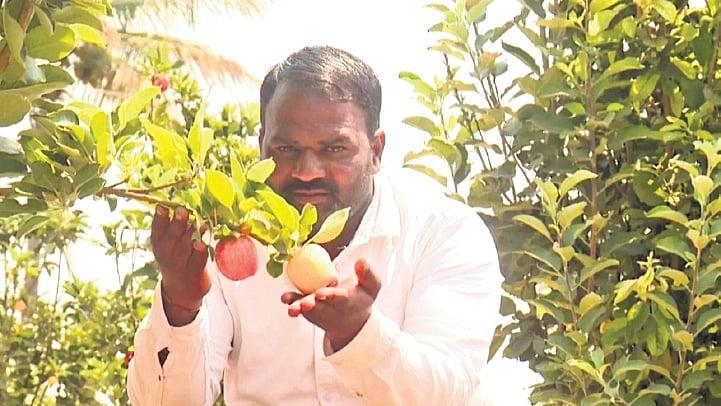
A farmer from Kulali village in Mudhol taluk has demonstrated that innovative horticulture can create new opportunities even in a traditionally hot agricultural region. Farmer Srishail Teli successfully cultivated apples on around seven acres of land despite temperatures that can rise above 38 degrees Celsius. Apple cultivation is generally associated with cooler regions such as Jammu and Kashmir and Himachal Pradesh. Teli chose heat-tolerant varieties and planted thousands of saplings after researching the possibilities of growing apples in North Karnataka. Reports said he planted varieties including Anna, Golden Dorsett and HRMN-99. His orchard began producing fruit in a relatively short period compared with traditional expectations. The farmer’s experiment attracted attention from other farmers who were interested in learning about the cultivation method. His success demonstrates the potential of crop diversification in regions where farmers traditionally depend heavily on a limited number of crops. Bagalkot is particularly known for crops such as sugarcane, maize, jowar, pulses and horticultural crops. Diversification can potentially help farmers explore additional sources of income. However, experts note that new crops should be selected only after studying soil, climate, water availability and market demand. Apple cultivation also requires careful management of irrigation, nutrition and plant health. The success of one farm does not automatically guarantee similar results everywhere. Nevertheless, the experiment provides an important example of agricultural innovation. Farmers in the region are increasingly looking at alternative horticultural opportunities. Such initiatives can encourage research-based farming and experimentation. The Bagalkot apple farm has also become an example of how technology,