
About Bagalkot District
Bagalkot District is situated in the northern part of Karnataka and is well known for its historical significance, architectural heritage, cultural traditions, and agricultural activities. The district has played an important role in the history of Karnataka, particularly during the rule of the Chalukyas, whose influence can be seen in the numerous temples, monuments, sculptures, and cave structures found across the region. The district headquarters, Bagalkot, serves as an important administrative, commercial, and educational centre for the surrounding areas.
One of the major attractions of the district is Badami, famous for its magnificent rock-cut cave temples, sandstone cliffs, and historic architecture. The caves contain impressive sculptures and carvings associated with Hindu and Jain traditions. Aihole, often regarded as an important centre of early temple architecture, has a large number of ancient temples displaying different architectural styles. Pattadakal, another major heritage destination, is celebrated for its group of historic temples and is recognized as a UNESCO World Heritage Site. These destinations attract visitors, historians, students, researchers, and architecture enthusiasts from different parts of India and abroad.
Agriculture is one of the important economic activities in Bagalkot District. The region supports the cultivation of various crops, and farming communities contribute significantly to the local economy. Along with agriculture, trade, small-scale industries, handicrafts, livestock activities, and other businesses provide employment and support livelihoods. The district’s rural areas have a strong connection with traditional farming practices and village-based economic activities.
History of Bagalkot District
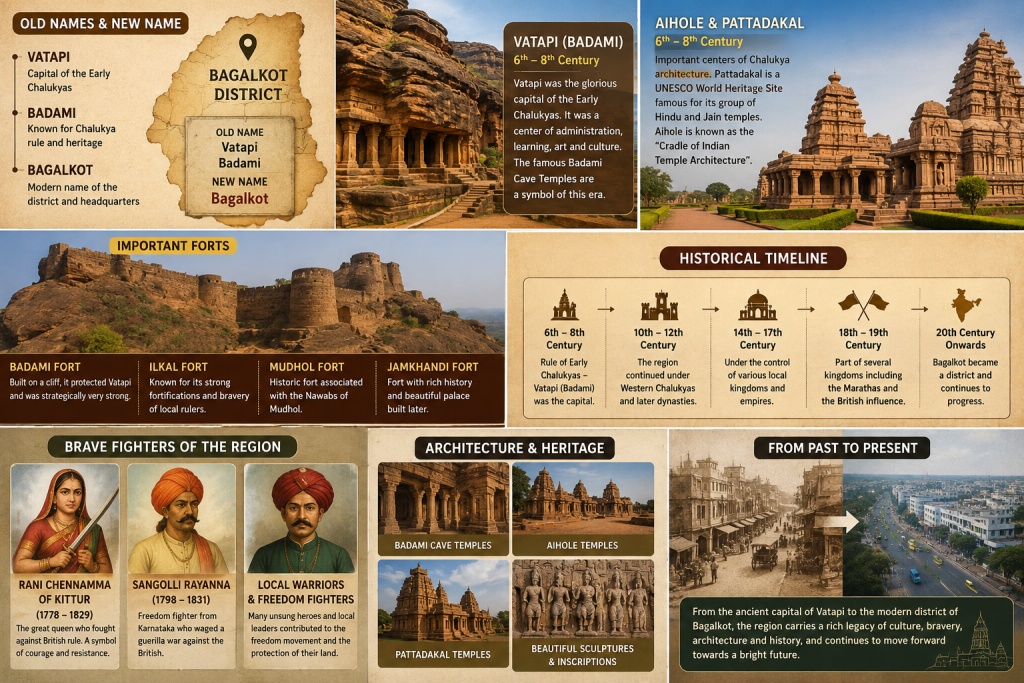
- Ancient Name – Vatapi
- Present Name – Bagalkot
- Chalukyan Rule
- Vatapi as Capital
- Badami Cave Temples
- Badami Fort
- Aihole Heritage
- Pattadakal Heritage
- Chalukyan Architecture
- Western Chalukyas
- Regional Kingdoms
- Mudhol Fort
- Jamkhandi Fort
- Ilkal Heritage
- Maratha Influence
- British Period
- Rani Chennamma
District Overview
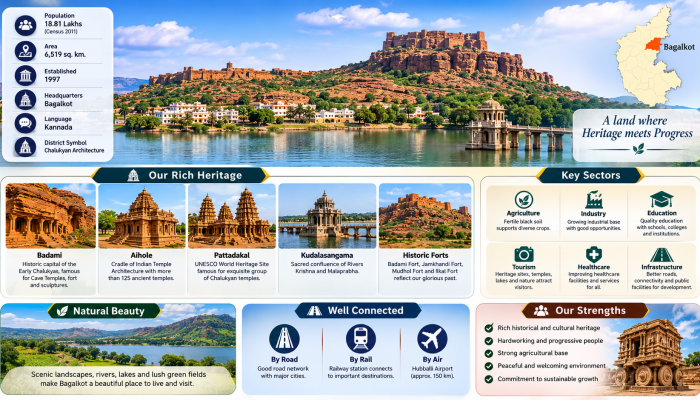
Bagalkot District is located in the northern part of Karnataka and is known for its rich historical, cultural and architectural heritage. The district has a strong connection with the Chalukyan dynasty, with Badami (ancient Vatapi), Aihole and Pattadakal being its most important historical centres. Badami is famous for its rock-cut cave temples and historic fort, while Aihole is renowned for its early temple architecture. Pattadakal is a UNESCO World Heritage Site celebrated for its magnificent Chalukyan temples. Agriculture is an important part of the district’s economy, along with trade, handicrafts, tourism and small-scale industries. The district also includes historically significant places such as Kudalasangama, Mahakuta, Mudhol and Jamkhandi
Famous in Bagalkot District
Bagalkot District is famous for its rich heritage, ancient temples, forts, traditional foods and vibrant culture. Badami, Aihole, Pattadakal, Kudalasangama and Mahakuta are among its major attractions. The district is also known for traditional foods such as Jolada Roti, Ennegayi and Chiroti. Its history and culture are enriched by renowned personalities, warriors, sports figures and public leaders associated with Karnataka. Badami is well known for its historic cave temples and beautiful sandstone landscape. Pattadakal and Aihole attract visitors interested in ancient architecture, history and sculpture. The district’s agriculture, handloom traditions and local crafts also contribute to its cultural identity. Its villages and towns preserve the distinctive traditions and lifestyle of North Karnataka.

Agriculture in Bagalkot District
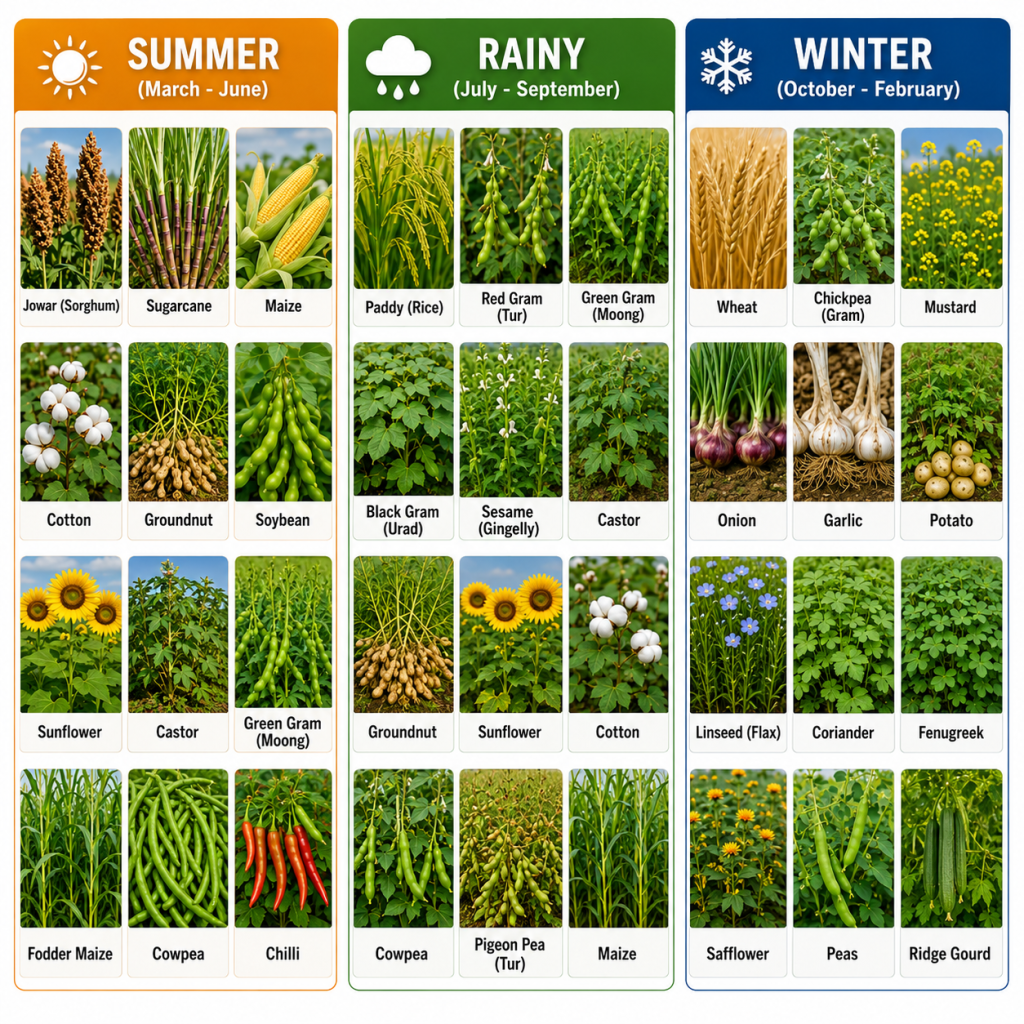
- Summer Season (March–June) – The major summer crops include Jowar (Sorghum), Sugarcane, Maize, Cotton, Groundnut and Soybean.
- Summer Pulses – Green Gram, Cowpea and other pulse crops are cultivated during the summer season.
- Summer Commercial Crops – Chilli, Sunflower and Castor are also included in the summer crop pattern.
- Fodder Crops – Fodder Maize is cultivated to support livestock and related agricultural activities.
- Rainy Season (July–September) – Paddy (Rice) is one of the important crops shown during the rainy season.
- Rainy Season Pulses – Red Gram (Tur), Green Gram, Black Gram (Urad), Cowpea and Pigeon Pea are cultivated during this period.
- Rainy Season Oilseeds – Sesame (Gingelly) and Castor are included among the crops grown during the rainy season.
- Rainy Season Other Crops – Maize, Groundnut, Sunflower and Cotton are also represented in the rainy-season crop pattern.
- Winter Season (October–February) – Wheat and Chickpea (Gram) are important crops cultivated during the winter period.
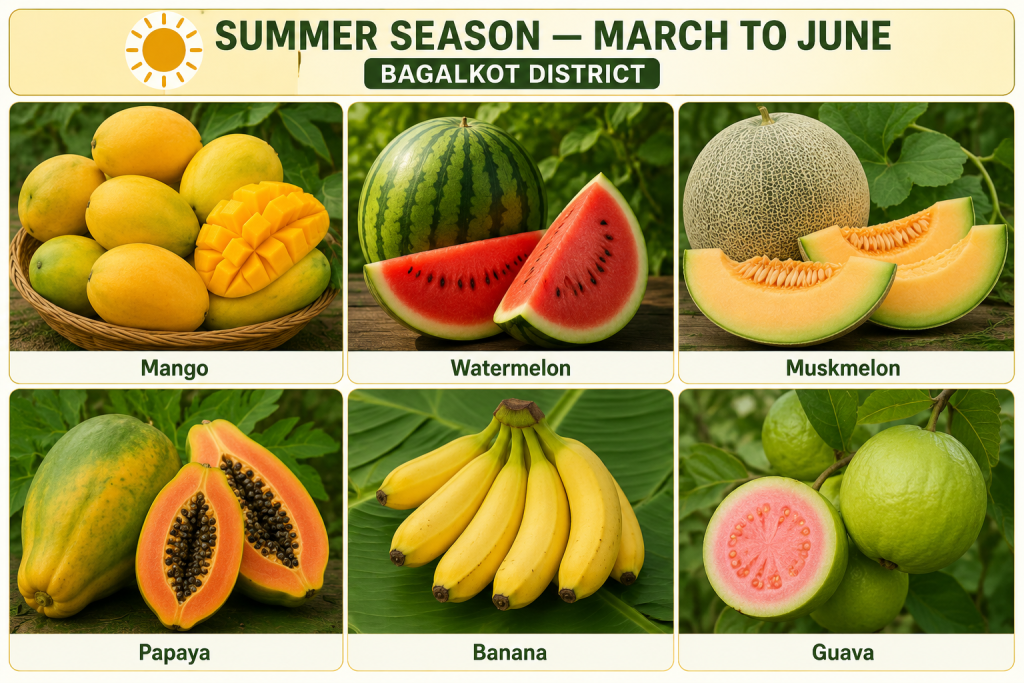
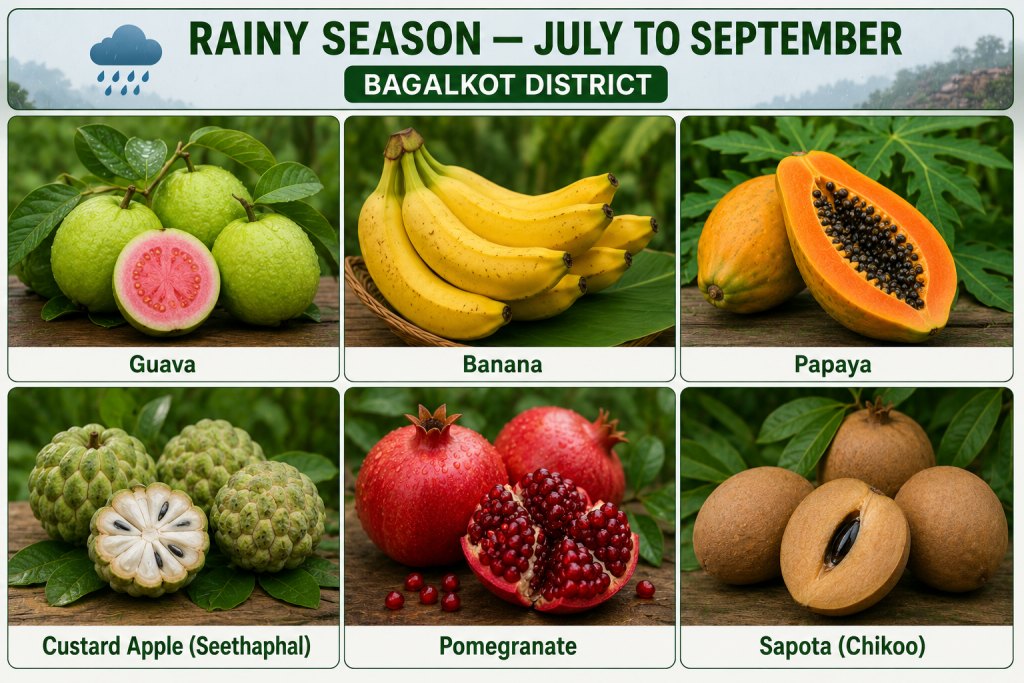
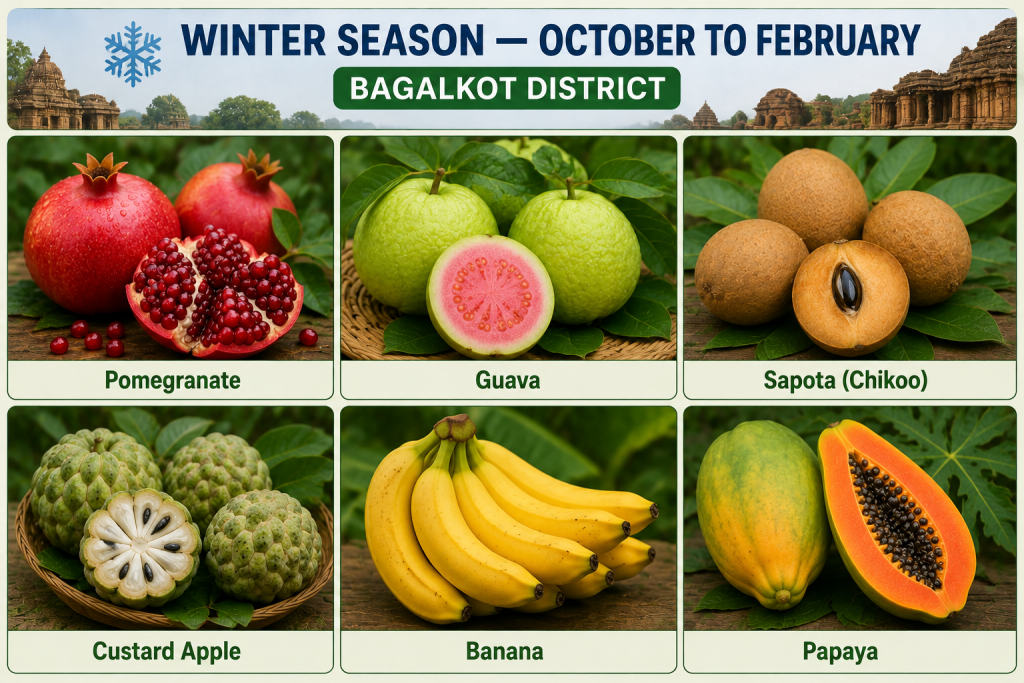
Seasonal Fruits
Temperature Bagalkot District
Summer
March – JuneWeather Hot and dry conditions
Rainfall Generally low
Highlights Agricultural activities continue
Summer in Bagalkot is generally hot and dry. Temperatures rise during the daytime, while evenings are comparatively comfortable. Farmers prepare their fields and crops according to seasonal conditions.
Monsoon
July – SeptemberWeather Warm with rainfall
Rainfall Main rainy period
Highlights Supports seasonal agriculture
The monsoon season brings rainfall to Bagalkot District and provides important moisture for agriculture. The weather becomes comparatively cooler and the landscape becomes greener during periods of good rainfall.
Winter
October – FebruaryWeather Cool and pleasant
Rainfall Generally limited
Highlights Suitable for winter crops
Winter generally brings pleasant and cooler weather to Bagalkot. Daytime conditions are comfortable, while nights can be cooler. The season is favourable for agricultural and outdoor activities.
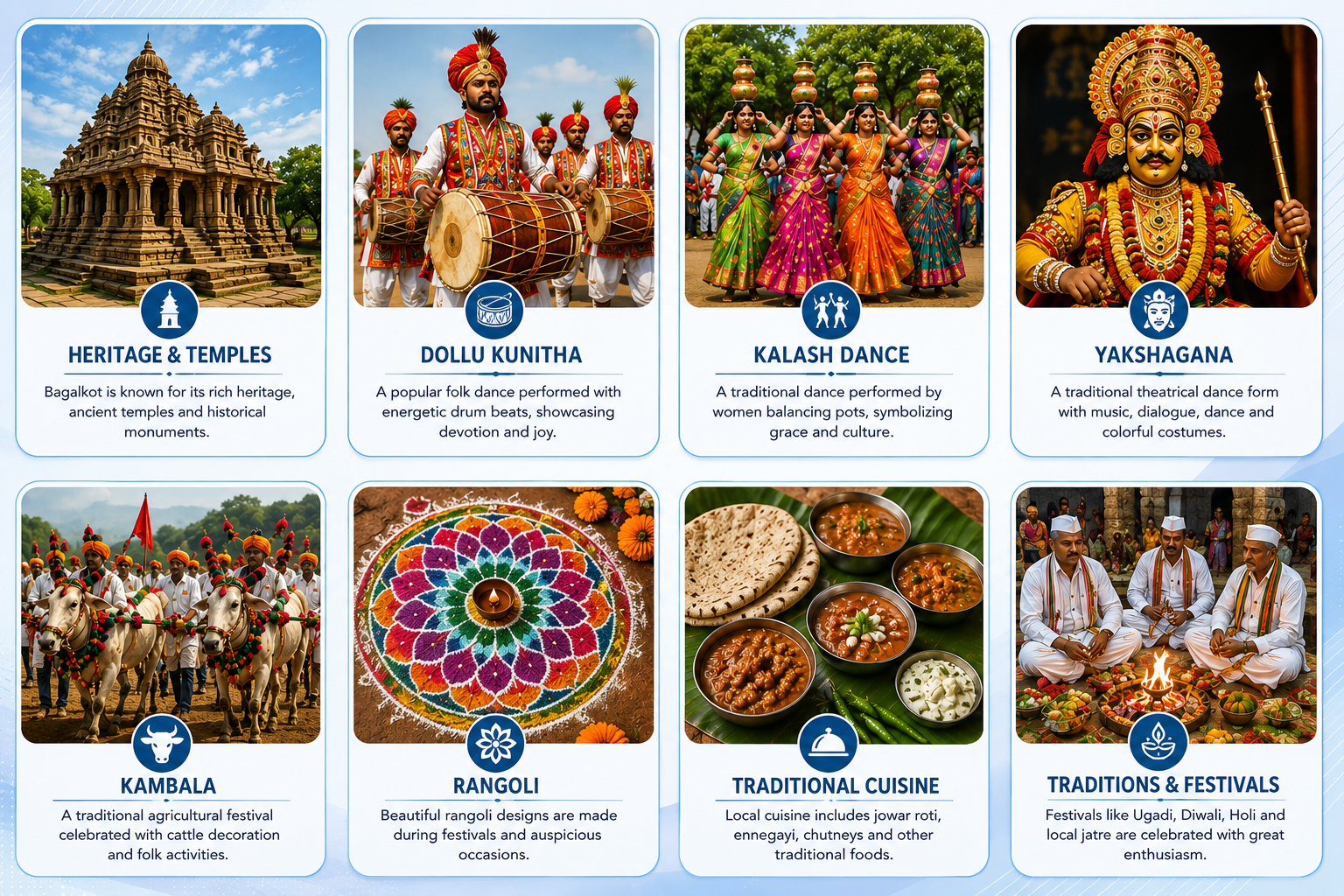
Culture and Tradition
Population & Statistics
Revenue Bagalkot District
Taluk-wise Revenue Administration
Revenue administration centres across Bagalkot District
Bagalkote
Revenue & land administration
Badami
Revenue & land administration
Bilagi
Revenue & land administration
Hungund
Revenue & land administration
Jamkhandi
Revenue & land administration
Mudhol
Revenue & land administration
Ilkal
Revenue & land administration
Guledgudda
Revenue & land administration
Rabakavi-Banahatti
Revenue & land administration
Major Revenue Sources
Key areas associated with district revenue administration
Land Revenue
Revenue associated with land administration and related services.
Registration & Stamps
Government receipts associated with registration and stamp-related services.
Mining & Minerals
Revenue and regulatory activities associated with mineral resources.
Municipal Revenue
Urban local body revenues including taxes, fees and service charges.
Commercial Taxes
Government revenue generated through applicable commercial activities.
Service Fees
Receipts from various certificates, permissions and government services.
District Budget & Expenditure
Major public expenditure areas for district development
Education
School education, infrastructure and educational development.
Health
Healthcare facilities, public health services and medical infrastructure.
Agriculture
Agricultural development, farmer support and irrigation-related activities.
Roads & Infrastructure
Road development, public infrastructure and connectivity projects.
Water Supply
Drinking water, water resources and related public infrastructure.
Rural Development
Gram Panchayat and rural development programmes.
Urban Development
Municipal services, urban infrastructure and civic development.
Social Welfare
Welfare programmes and support for eligible communities.
Budget Information
Budget allocations vary by financial year and by department. Use the latest approved Karnataka Government / District Administration budget documents for exact rupee values.
Reach to Bagalkot District
By Bus
Bagalkot is well connected by road with major cities and towns of Karnataka through KSRTC and private bus services.
By Train
Bagalkot Railway Station provides rail connectivity with important cities in Karnataka and neighbouring states.
By Flight
Bagalkot does not have a commercial airport within the city. Visitors can use nearby airports and continue their journey by road or rail.