
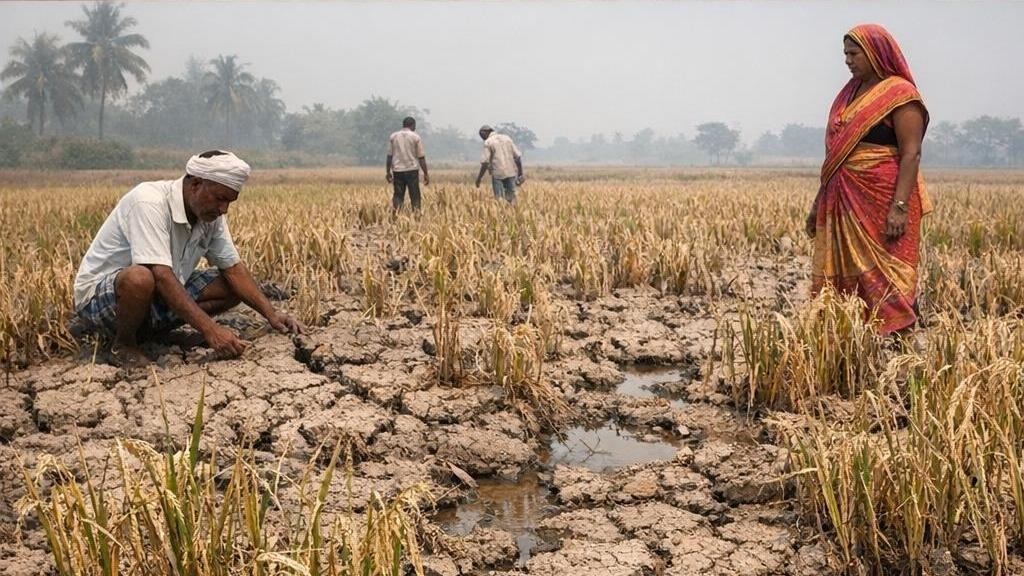
Farmers in Bagalkot district are facing renewed concerns over crop conditions amid a reported rainfall deficit. Agriculture in several parts of the district depends heavily on timely monsoon rainfall. A shortage of rain can affect soil moisture and crop development during important stages of the agricultural season. Farmers growing rain-dependent crops are particularly vulnerable to prolonged dry conditions. The rainfall situation can influence sowing, crop growth and irrigation requirements. Bagalkot is an important agricultural district where farmers cultivate crops including pulses, cereals, oilseeds and commercial crops. Insufficient rainfall can increase the financial burden on farmers who depend on irrigation sources. Farmers may need to carefully manage available water resources to protect standing crops. Agricultural experts generally recommend monitoring soil moisture before deciding on irrigation. Water-saving techniques can help farmers manage limited water supplies more effectively. Crop diversification can also reduce dependence on a single crop during uncertain weather conditions. Farmers are being encouraged to monitor local weather forecasts and agriculture advisories. Timely information can help them plan irrigation, fertiliser application and crop-protection activities. The rainfall deficit could also influence crop yields if dry conditions continue during critical growth stages. Agriculture officials and extension workers have an important role in guiding farmers during such conditions. Farmers can seek crop-specific advice from local agriculture offices and extension centres. The situation highlights the importance of climate-resilient agricultural practices in northern Karnataka. Improved irrigation infrastructure and water conservation can provide additional support during rainfall shortages. For Bagalkot farmers, the coming weeks will remain important for crop development and agricultural planning.